
Abstract art is one of the most revolutionary movements in the history of modern art. Instead of depicting recognizable people, objects, or landscapes, abstract artists use colors, shapes, lines, and textures to communicate ideas, emotions, and imagination. Today, **abstract art** continues to inspire artists, designers, and art lovers around the world with its limitless creative possibilities.
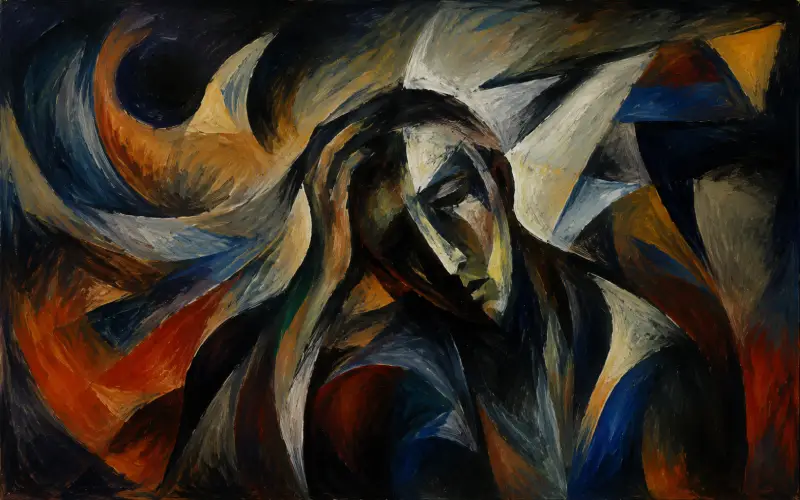
Abstract art is a style of visual art that does not attempt to represent reality accurately. Rather than creating realistic images, artists simplify, distort, or completely abandon recognizable forms to focus on composition, color, movement, and emotion.
Every viewer may interpret an abstract artwork differently, making it one of the most personal and expressive forms of artistic communication.
Although elements of abstraction existed in ancient decorative art, modern abstract art began to emerge during the early 20th century.
Artists sought new ways to express spiritual ideas, emotions, and imagination instead of simply copying nature. This shift marked a turning point in art history and paved the way for numerous modern art movements.
Abstract art became increasingly influential throughout Europe before spreading across the world.
There is no single founder of abstract art, but **Wassily Kandinsky** is widely regarded as the pioneer of pure abstract painting.
Kandinsky believed that colors and shapes could evoke emotions in the same way that music affects listeners. His innovative paintings abandoned realistic subjects and focused entirely on visual harmony.
Other important pioneers include:
Each contributed unique ideas that helped define abstract art.
Abstract art can take many forms, but several characteristics are commonly found.
Abstract artists are not limited by realistic representation. They are free to invent entirely new visual languages.
Bold or subtle color combinations often become the main subject of the artwork.
Circles, squares, triangles, curves, and flowing forms replace realistic figures and objects.
Many abstract paintings are created to communicate feelings, moods, or spiritual experiences.
Balance, rhythm, contrast, and movement play essential roles in creating successful abstract artwork.
Abstract art has developed into several distinct styles over time.
Uses precise mathematical shapes and carefully organized compositions.
Emphasizes spontaneous brushwork and emotional freedom.
Large areas of color create immersive emotional experiences.
Combines abstraction with energetic gestures and dramatic brushstrokes to convey emotion.
Abstract art transformed the purpose of painting by proving that visual beauty and emotional meaning do not require recognizable subjects.
Today, abstract principles are used far beyond traditional fine art.
Some of the most influential abstract artists include:
Their groundbreaking work continues to shape modern visual culture.
Contemporary abstract artists combine traditional painting with digital media, mixed materials, and experimental techniques.
Collectors, museums, and galleries continue to celebrate abstract art because it encourages viewers to explore personal interpretation rather than seeking one correct meaning.
Its flexibility also makes abstract art one of the most popular styles for homes, offices, hotels, and public spaces.
Abstract art represents creative freedom at its highest level. By moving beyond realistic representation, artists discovered entirely new ways to communicate through color, form, texture, and movement. From the pioneering work of Wassily Kandinsky to today’s contemporary creators, abstract art remains a powerful and influential force in the world of visual expression.