
Oil paint has played a transformative role in the history of art, allowing artists to create richly detailed, vibrant, and long-lasting masterpieces. Thanks to its slow drying time, excellent color blending, and remarkable durability, oil paint became the preferred medium for generations of painters. Understanding the history of oil paint reveals how this versatile material shaped some of the world’s greatest artistic achievements.
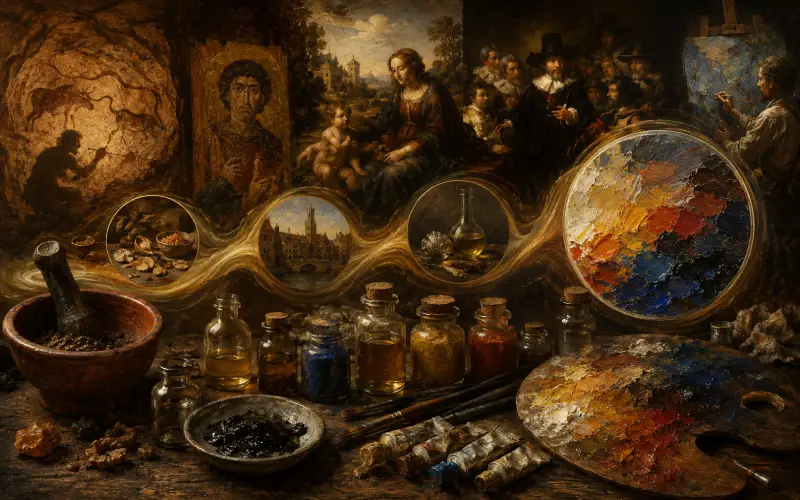
Although oil painting is closely associated with the European Renaissance, its origins date back much earlier. Archaeological evidence suggests that artists in Central Asia used oil-based paints as early as the 7th century. These early painters mixed natural pigments with drying oils extracted from plants to create durable wall paintings.
For centuries, however, tempera paint remained the dominant artistic medium in Europe because it dried quickly and was easier to produce.
Oil painting began to flourish in Northern Europe during the 15th century. Artists discovered that mixing pigments with linseed oil produced smoother textures, richer colors, and more flexible painting techniques than tempera.
The new medium allowed painters to create:
These advantages quickly made oil paint the preferred choice for professional artists.
Although Jan van Eyck did not invent oil paint, he is widely credited with refining and popularizing its use during the early Renaissance.
His innovative painting techniques demonstrated the remarkable possibilities of oil paint, including transparent glazing, luminous colors, and extraordinary detail. His masterpieces inspired artists throughout Europe to adopt the medium.
Oil paint revolutionized artistic expression by providing greater creative freedom than earlier painting materials.
Its key advantages include:
Artists could work on a painting over several days or even weeks, allowing careful blending and gradual refinements.
Oil-based pigments produced vibrant, deep colors that retained their brilliance for centuries.
The extended drying time made it possible to create realistic skin tones, atmospheric landscapes, and subtle shadows.
When properly prepared and protected with varnish, oil paintings can survive for hundreds of years.
The Renaissance marked the golden age of oil painting. Many of history’s greatest artists embraced the medium to produce works that remain cultural treasures today.
Famous Renaissance painters who mastered oil paint include:
Their paintings demonstrated unprecedented realism, perspective, and emotional depth.
Oil paint remained the dominant artistic medium through the Baroque, Rococo, Romantic, Realist, and Impressionist periods.
Artists such as:
used oil paint in unique ways, proving its versatility across different artistic styles.
The Industrial Revolution transformed oil painting by making pre-mixed paints commercially available in metal tubes during the 19th century.
This innovation allowed artists to paint outdoors more easily and contributed to the rise of movements such as Impressionism.
Today, oil paint is manufactured using highly refined pigments and drying oils, offering artists an enormous range of colors and professional-quality materials.
Despite the development of acrylic and digital art, oil paint remains highly valued because it offers:
Many contemporary artists continue to prefer oil painting for portraits, landscapes, still life, and fine art commissions.
The history of oil paint spans more than a thousand years, evolving from early experiments in Asia to becoming the defining medium of Western art. Although Jan van Eyck helped popularize oil painting during the Renaissance, countless artists have expanded its possibilities over the centuries. Today, oil paint remains one of the most respected and enduring materials in the art world, connecting modern creators with a tradition that has shaped artistic expression for generations.